The Parsons Table is one of the most recognizable forms in modern furniture design. It is defined by a simple, demanding rule: the legs and top meet flush at each of the four corners. Its clean geometry has been reproduced in countless materials and finishes. What is less often considered is what those materials are made of, where they come from, and what happens to them when the table is no longer needed.
For the student competition A Parsons Table for the President’s Office, Parsons Healthy Materials Lab (HML) is collaborating with Parsons School of Design faculty to invite students to take on these questions. Alongside history, craft, and manufacturability, entries will be judged on how thoughtfully they apply healthier, low-carbon, and regenerative materials to every part of the table, including the structure, joinery, adhesives, and finishes.
This guide expands on the material health criteria and deliverables in the competition brief. It offers guiding questions, practical recommendations, and resources to support your research.
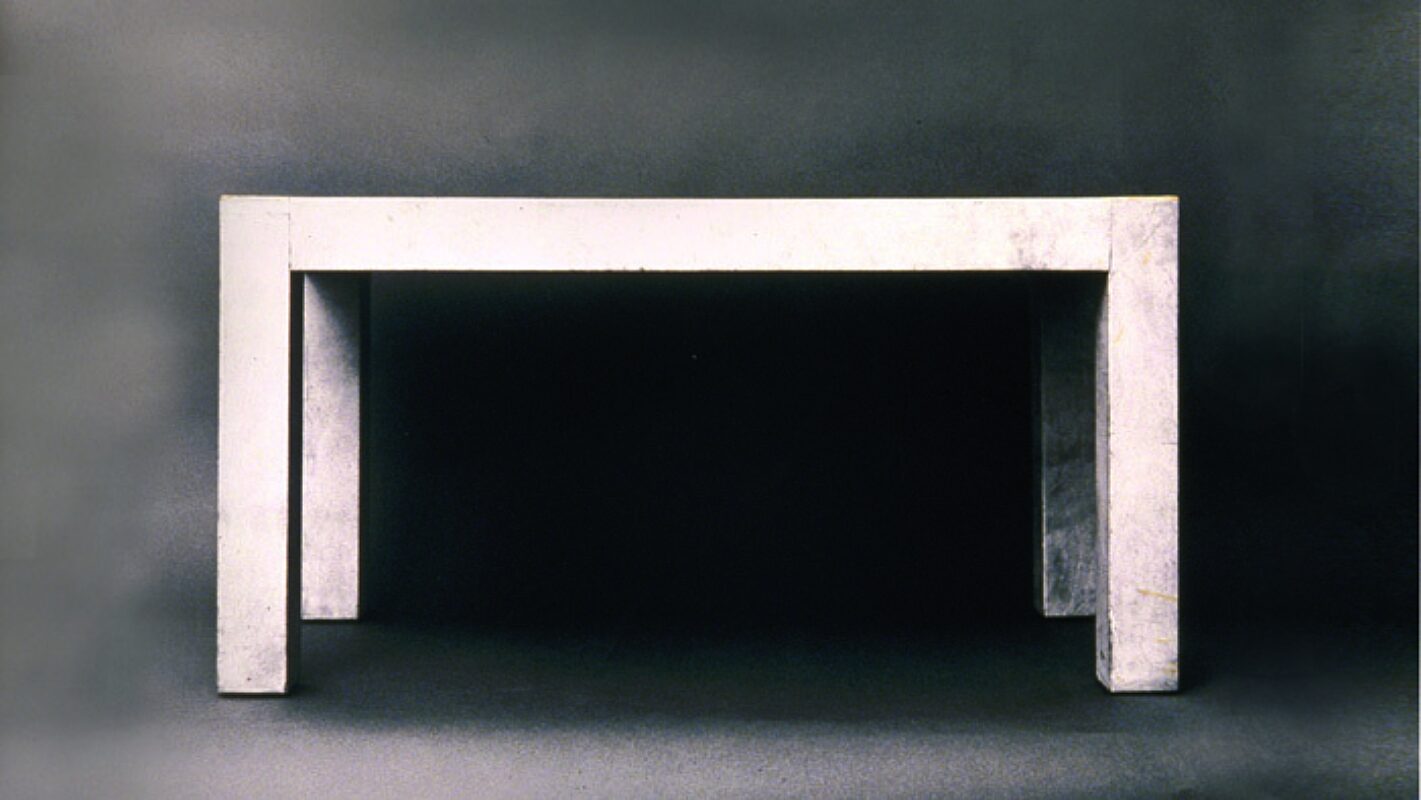
Parsons Table, Jean-Michel Frank, 1937
Why Material Health Matters for a Table
A table may seem like a simple object, but each component carries its own story. Wood substrates may be bonded with formaldehyde-based resins. Adhesives are often made from petrochemicals and can contain hazardous additives. Finishes can release volatile organic compounds (VOCs) into the air we breathe. Each material also has an environmental footprint through extraction, processing, transportation, and disposal.
Designing for material health means considering the effects of these choices on the people who make, use, and maintain the table, and on the ecosystems and communities connected to its supply chain. A table designed for the Parsons community at 2 West 13th Street can be a visible example of what healthier design looks like.
Material Health Criteria
The competition brief asks students to consider the following. Each section includes questions to guide your research.
1. Material Transparency
It’s recommended practice to contact manufacturers and suppliers to ask about material ingredients, origin, and environmental impact. Useful documents include:
- Ingredient disclosures that list what a product contains
- Life Cycle Assessments (LCAs) and Environmental Product Declarations (EPDs), which report a product’s environmental impacts, including embodied carbon
- Third-party certifications, such as Forest Stewardship Council (FSC) certification for wood or emissions certifications for finishes and composite wood
Materials new to the market may not have certifications or disclosures yet, and many are made with proprietary processes. This does not disqualify them. Record what you were able to learn, what you asked for, and what information was unavailable. Documenting these gaps is part of the research.
Ask: What is this material made of? Who made it, and where? What documentation can the manufacturer provide?
2. Simplicity of Components
Use as few different materials and components as possible. Fewer materials make a table easier to understand, maintain, and eventually take apart and reuse.
Consider where each material comes from, both on its own and as part of the whole design. A table made from regionally sourced materials tells a different story than one assembled from components shipped from many distant or international locations.
Ask: How many different materials does my design use? Can any be eliminated or combined? Where does each come from, and how far does it travel?
3. Design for Disassembly and Reuse
The brief already requires that the table come apart to fit the 2 West 13th Street freight elevator. Treat this requirement as a design opportunity. A table that can be taken apart easily can also be repaired, relocated, or reused, and its materials can be recovered at the end of its life. This reduces waste and avoids the need to manufacture new materials, which lowers carbon emissions.
Ask: Can every component be separated without damage? Could the parts be reused in another table or another object?
4. Mechanical Joinery Over Adhesives
Use mechanical fasteners or traditional joinery wherever possible instead of adhesives. The precise, flush-corner condition at the heart of the Parsons Table is also an invitation to explore joinery as both a craft challenge and a material health strategy.
If an adhesive is needed, choose a bio-based adhesive without PFAS. Most adhesives are made from petrochemicals and contain additives with toxic and high-carbon ingredients. Pay close attention to engineered and composite wood products, which have traditionally used urea-formaldehyde binders that can off-gas.
Ask: Where does my design rely on glue? Could joinery or a mechanical fastener do the same work?
5. Healthier Finishes
Choose finishes without harmful additives. Plant-based oils and mineral-based finishes greatly reduce exposure to VOCs, hazardous additives, and microplastics. Consider how the finish will be maintained and reapplied over time.
Ask: What is in this finish? Can it be renewed without stripping the table or using harsh chemicals?
6. Maintenance and Longevity
Plan for long-term care. A table that can be refinished, repaired, and kept in use for decades lowers carbon emissions and reduces waste.
Ask: Can the top be refinished? Can a damaged leg or part be replaced on its own? How will the table be cleaned day to day, and with what?
7. Avoid PVC and Other Materials of Concern
Do not use PVC in any part of the table, including edge banding, laminates, backings, or coatings. PVC can expose occupants and manufacturers to highly toxic chemicals such as dioxins and phthalates. Also avoid materials with added PFAS and finishes or binders that contain added formaldehyde.
Ask: Do any hidden components, such as edge banding, glides, or hardware coatings, contain PVC or other chemicals of concern?
8. Reclaimed and Found Materials
Reuse is a key strategy for sustainable design. Building with reclaimed, salvaged, or found materials keeps valuable resources out of the waste stream, reduces demand for new raw materials, and lowers embodied carbon. Every year, millions of pieces of furniture end up in landfills, contributing to toxic and carbon emissions and damaging ecosystems. Giving materials a second life is one way to change that.
Reclaimed materials also require care. Older wood, furniture parts, and salvaged components may carry finishes, coatings, or binders that are no longer considered acceptable from a toxicity perspective, such as lead-based paints or formaldehyde-based resins. A material can be a strong choice for the planet’s health and carbon footprint while still needing attention to protect human health.
Students are encouraged to consider reclaimed and found materials and to weigh these trade-offs openly. Investigate the material’s history where possible, identify any existing coatings or treatments, and choose health-conscious restoration methods, such as removing or sealing questionable finishes and refinishing with healthier products. Record these decisions in your lifecycle diagram and materials list.
Ask: Where did this material come from, and what was it used for before? Does it carry finishes or treatments of concern? How can I restore it safely, and how does its carbon benefit compare with a new material?
A Note on Material Claims
Terms like “natural,” “bio-based,” “regenerative,” and “sustainable” are often used loosely. A natural material is not automatically healthy, and a bio-based product may still contain synthetic additives. Be specific: describe what each material is, how it is made, and what evidence supports your claims.
Deliverables: Material Health Requirements
Two of the competition deliverables address material health directly.
MATERIAL LIFECYCLE DIAGRAM (AND MATERIALS LIST)
Students will submit a diagram that traces each material in the table from origin to end of life. The diagram should show:
- Source: Where each raw material comes from (region or supplier), and whether it is renewable, reclaimed, recycled, or extracted
- Processing and manufacturing: How each material is processed and made into the table, including the fabricator’s location and any adhesives, binders, or finishes used
- Transportation: Approximate distances from source to fabricator to the 2 West 13th Street site
- Use and maintenance: How the table will be cleaned, refinished, and repaired over its lifetime
- End of life: What happens to each component when the table is retired, such as disassembly, reuse, refurbishment, recycling, composting, or disposal
The diagram should come with a materials list naming every material and component, including fasteners, adhesives, and finishes. For each item, include any available manufacturer disclosures, certifications, or LCA information, and note where that information could not be obtained.
A strong diagram is clear, honest, and specific. It does not need to show a perfect lifecycle. It should show that you understand the full journey of your materials and have made informed choices.
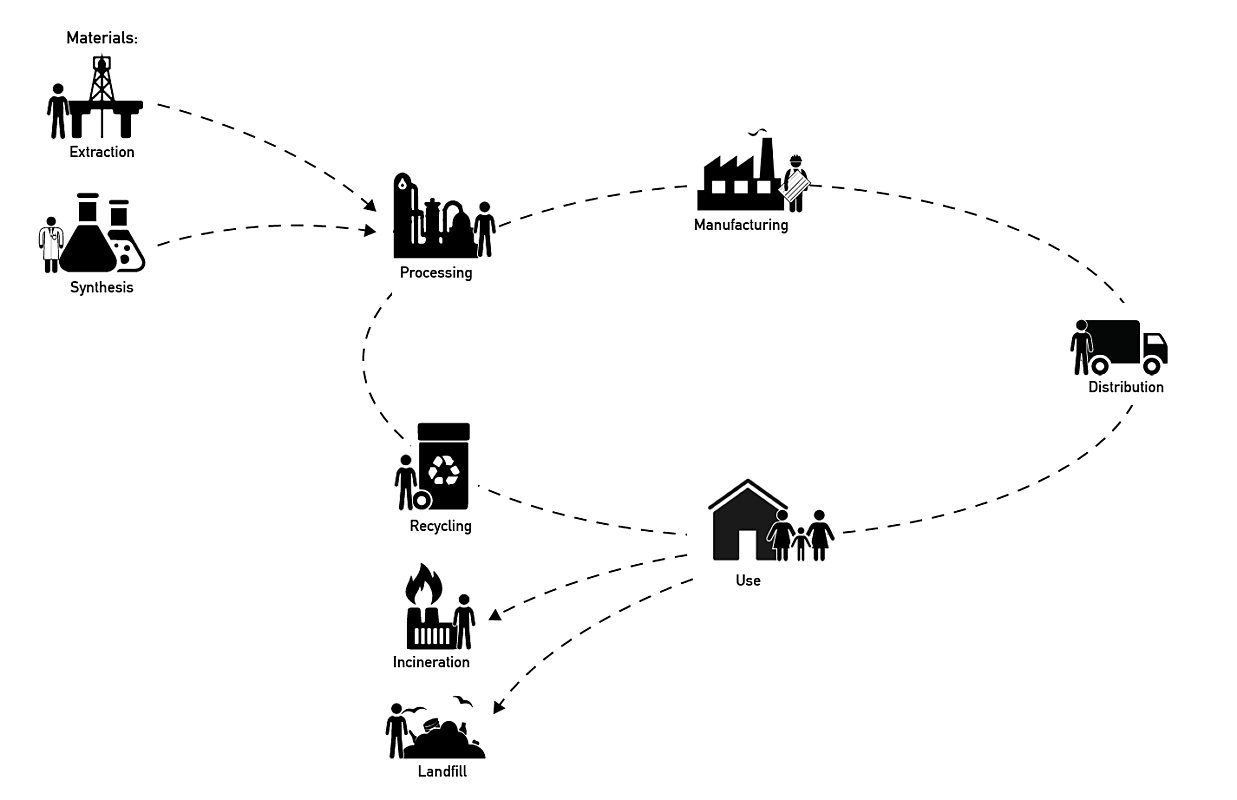
Sample Lifecycle Diagram
VISUAL NARRATIVE
The visual narrative should describe the historical inspiration behind the design, the material innovation supporting it, and the health and environmental considerations that informed your material choices.
A Note on the ¼-Scale Model
The brief requires that the ¼-scale model be made from the same materials and joinery techniques as the full-scale prototype. Apply the same material health principles to your model-making process, especially when selecting adhesives and finishes for test pieces. HML’s Healthier Model-Making Materials collection is a helpful starting point.
Additional Resources
HML Resources
- Healthier Millwork and Cabinetry: Products and spec guidance for evaluating wood substrates, finishes, and components
- Healthier Cabinetry Guide: A guide to healthier choices for casework and built furniture
- Healthier Finishes + Sealers: Bio-based oils and safer finish formulations
- Adhesives, Mortars, Grouts + Sealants: Hazards to avoid, including PFAS, phthalates, and isocyanates, and guidance on prioritizing mechanical fasteners
- Composite Wood Products: Composite wood made with healthier resins and guidance on formaldehyde-free binders
- Low Embodied Carbon Materials: Materials that help reduce a project’s carbon footprint
- Healthier Model-Making Materials: Healthier options for models and prototypes
- Circularity: Guidance on sourcing, longevity, and end-of-life reuse, composting, and recycling, helpful for building your lifecycle diagram
- Material Health 101: An introduction to ingredient disclosure, hazard screening, and VOC emissions
- Recycled Furnishings: A Directory of Circular Resources: Material guidance, health-conscious repair and restoration methods, and vetted sources for secondhand and salvaged furnishings. Download the guide here
- Healthy Materials Method Cards: A free downloadable deck for bringing material health into the design process
Additional Resources
- Sustainable Furnishings Council: Guiding questions for evaluating furniture components and suppliers
Questions
For up to date information on the competition, refer to the Competition Brief here.
Good luck. We look forward to seeing your designs.
Read More
Join Our Academic Network
Get Access to our carefully researched and curated academic resources, including model syllabi and webinars. An email from an academic institution or a .edu email address is required. If your academic institution does not use .edu email addresses but you would like to join the network, please contact healthymaterialslab@newschool.edu.
Already have an account? Log in