Research Reports:
From Plastic-Based Homes to HempLime Healthier Housing on Lower Sioux Land
Lower Sioux 2025-2026
Healthy Materials Lab (HML) at Parsons School of Design presents a comprehensive research report examining the material composition of typical American manufactured homes and outlining a clear pathway toward healthier, regenerative housing.
Working with Earl Pendleton of the Lower Sioux Indian Community, this research and report support their case to build a vertical hemp economy “from seed to sovereignty”. Earl’s vision for the Hemp and Housing Project is to build future housing from hemplime, leveraging their connection to the land and agricultural capabilities.
The report quantifies the presence of petroleum-derived plastics, harmful chemicals, and carbon-intensive products throughout conventional manufactured housing while demonstrating how locally grown hemp and healthier building materials can transform affordable housing.
THE REPORT: MATERIAL ANALYSIS
Using a detailed room-by-room material assessment, Analyzing the Materials of Typical American Manufactured Homes to Make the Case for Healthier HempLime Housing on Lower Sioux Land documents the products used throughout a manufactured home to quantify both toxic ingredients and embodied carbon. It also presents side-by-side comparisons between conventional materials and healthier alternatives.
Download the report to explore the material analysis, carbon calculations, and pathways toward healthier housing futures.
Plastic-based materials account for the majority of interior surface area in a standard manufactured home, exposing residents to toxic chemicals linked to asthma, cancer, and developmental disorders.
In response to these health and environmental risks, the Lower Sioux Indian Community is advancing a bold “Seed to Sovereignty” model that integrates regenerative hemp farming, local material processing, and the construction of non-toxic, energy-efficient housing on tribal land. This vertically integrated approach addresses material toxicity, climate impact, and economic resilience simultaneously.
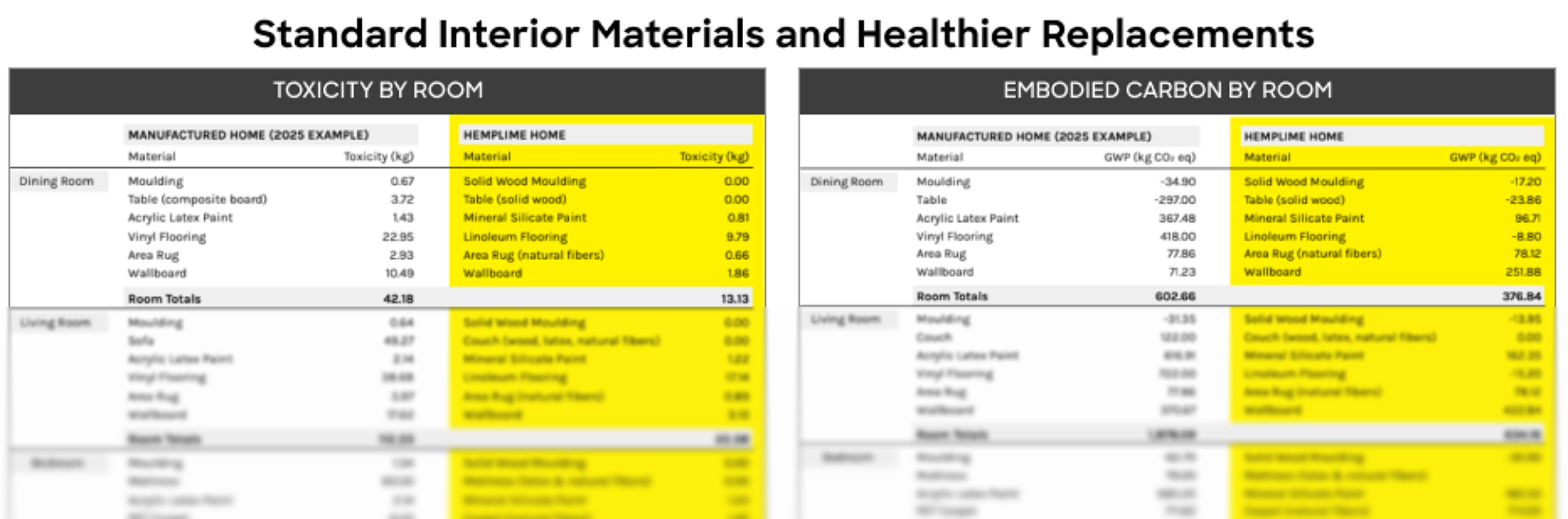
Standard Interior Materials and Healthier Replacements by Room Type, Analyzing the Materials of Typical American Manufactured Homes to Make the Case for Healthier HempLime Housing on Lower Sioux Land, 2025.
Beyond carbon reduction, the research demonstrates how transitioning to plant- and mineral-based materials, such as linoleum flooring, solid wood, and mineral silicate paints, significantly reduces the presence of carcinogens and endocrine disruptors throughout interior spaces.
By manufacturing their own building materials, the Lower Sioux Indian Community is strengthening local worker skills, advancing self-determination, and building long-term economic sovereignty - their Seed to Sovereignty model demonstrates that regenerative agriculture, material health, and economic self-determination can be achieved through housing.
Replacing fiberglass insulation with locally grown hemplime can sequester more than 3,000 kilograms of CO₂ per home.
This report offers a replicable model for rural, tribal, and underserved communities seeking healthier alternatives to plastic-based manufactured housing. It demonstrates that non-toxic, cost-competitive, and carbon-sequestering housing solutions are not only possible but ready for implementation.
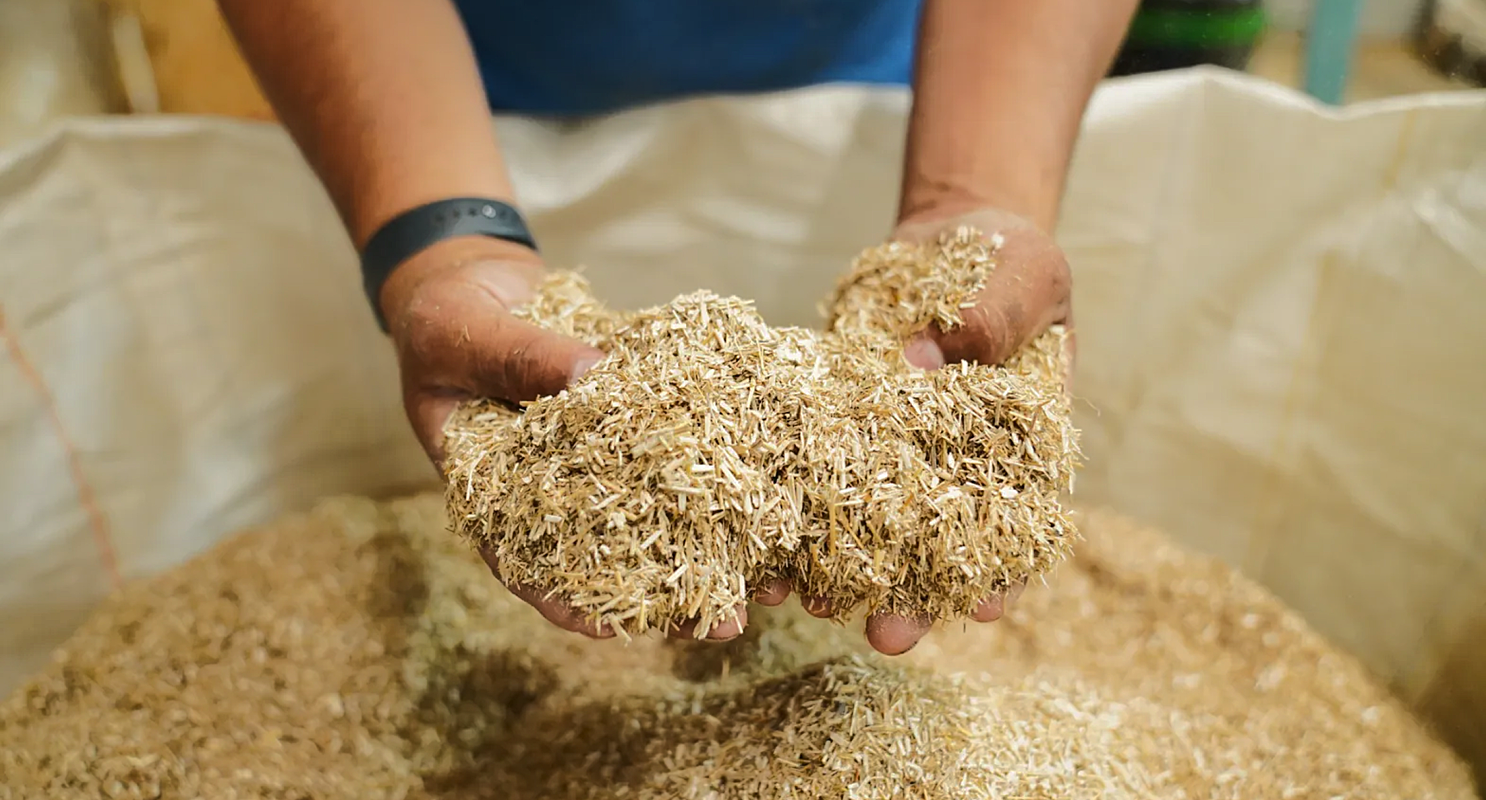
Joey Goodthunder holds up hemp hurds, 2023. Photo Courtesy of Dymanh Chhoun, Sahan Journal.
This work was supported by a grant from The 11th Hour Project, a program of the Schmidt Family Foundation. We are grateful to our collaborator Earl Pendleton - Visionary of the Lower Sioux Hemp Program and Housing Project and a member of the Lower Sioux Community - for his leadership and partnership throughout this research. We acknowledge and respect the land stewarded by the Lower Sioux community and the generations of Dakota people who have cared for it.
It is our hope that this report supports the Lower Sioux community’s vision for healthier housing and serves as a model for other rural communities seeking alternatives to petroleum-based plastic manufactured housing.
Join Our Academic Network
Get Access to our carefully researched and curated academic resources, including model syllabi and webinars. An email from an academic institution or a .edu email address is required. If your academic institution does not use .edu email addresses but you would like to join the network, please contact healthymaterialslab@newschool.edu.
Already have an account? Log in