Corn has nourished civilizations for thousands of years, but its potential extends far beyond food.
As the second most widely cultivated crop on Earth, corn generates enormous quantities of agricultural residues or “corn stover” - stalks, leaves, husks, and cobs - that are often treated as waste. Yet these by-products represent a significant source for the biobased building materials industry.
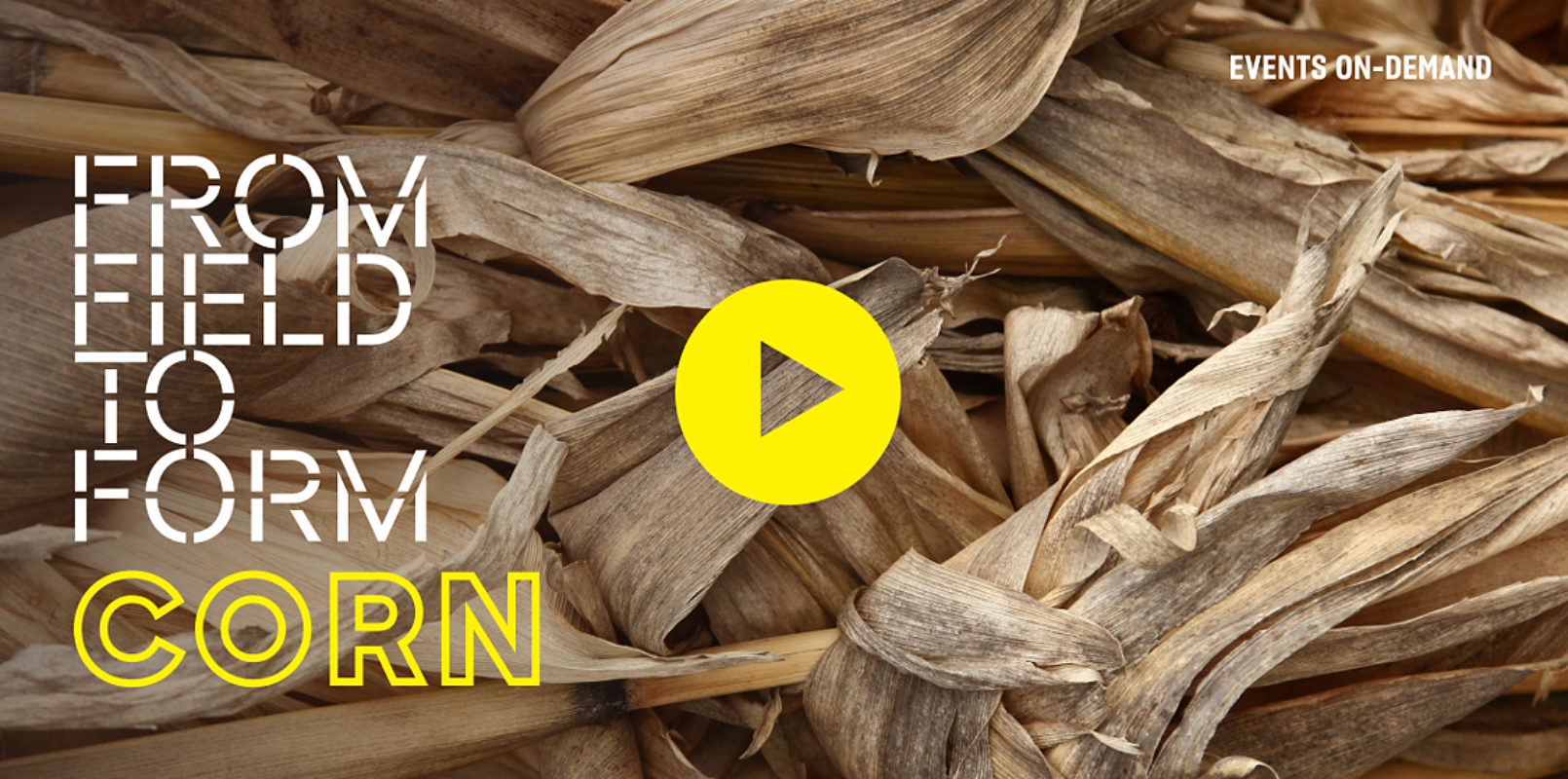
From Field to Form: Corn brings together leading voices in plant science, architecture, and material innovation to explore how this ancient crop can help shape a healthier, regenerative built environment. The event is part of an ongoing series co-hosted by Healthy Materials Lab and The Architectural League of New York, investigating the architectural possibilities of plant- and earth-based materials.
Moderated by Jonsara Ruth (Healthy Materials Lab), and Mae-ling Lokko (architectural scientist and designer), the event convenes experts whose work spans agriculture, material research, and design.
Margaret E. Smith, Professor at Cornell University and longtime maize breeder, traces corn’s deep cultural significance and its evolution through centuries of cultivation. Drawing from decades of field research, she highlights the remarkable diversity of corn and emphasizes the importance of breeding resilient varieties adapted to local growing conditions and organic systems. “Yet as we think about how to use materials in a way that’s sustainable, we need to recognize there’s going to be trade-offs,” she notes.
“It's about knowing where the balance is, because you're never going to have no impact." -Margaret Smith
Lane Segerstrom, founder and CEO of CornBoard Manufacturing, demonstrates how corn stover - the stalks and leaves left behind after harvest - can become durable composite materials that replace conventional wood products. His work reveals how agricultural by-products can become valuable feedstocks for manufacturing rather than waste streams.
Designer Fernando Laposse shares his material-driven practice, which explores the cultural, ecological, and economic value of overlooked plant resources. Through projects such as Totomoxtle, a veneer made from heirloom Mexican corn husks, he illustrates how design can celebrate biodiversity while supporting indigenous communities, preserving traditional agricultural practices, and creating a new generation of craftspeople.
Throughout the evening, speakers challenge conventional notions of waste and abundance, highlighting how crop residues can be transformed into insulation, composites, and other high-performance materials that store carbon and reduce dependence on petrochemicals. Together, they present a compelling vision of agriculture and architecture as interconnected systems capable of supporting both human and planetary health.
"Agriculture is culture. It is in the word." -Fernando Laposse
This event raises important questions about how agricultural by-products can become the foundation for new material economies. In reimagining corn residues as resources rather than waste, designers, researchers, and manufacturers are creating pathways toward a more circular, regenerative, and materially rich future.
Find the speaker bios here.
Watch other Events on Demand from this series and more here.