Bamboo is more than a fast-growing grass; it is a regenerative, carbon-sequestering, non-toxic material with transformative potential for the future of building. From Field to Form: Bamboo brings together leaders in agroforestry, material innovation, and architectural practice to explore the journey of bamboo from landscape to structural form. This event is part of a series co-hosted by Healthy Materials Lab and The Architectural League of New York that examines the architectural possibilities of plant- and earth-based materials.
“Bamboo can be a rapidly renewable solution to the need to decarbonize now.” -Paul Lewis, Principal LTL Architects
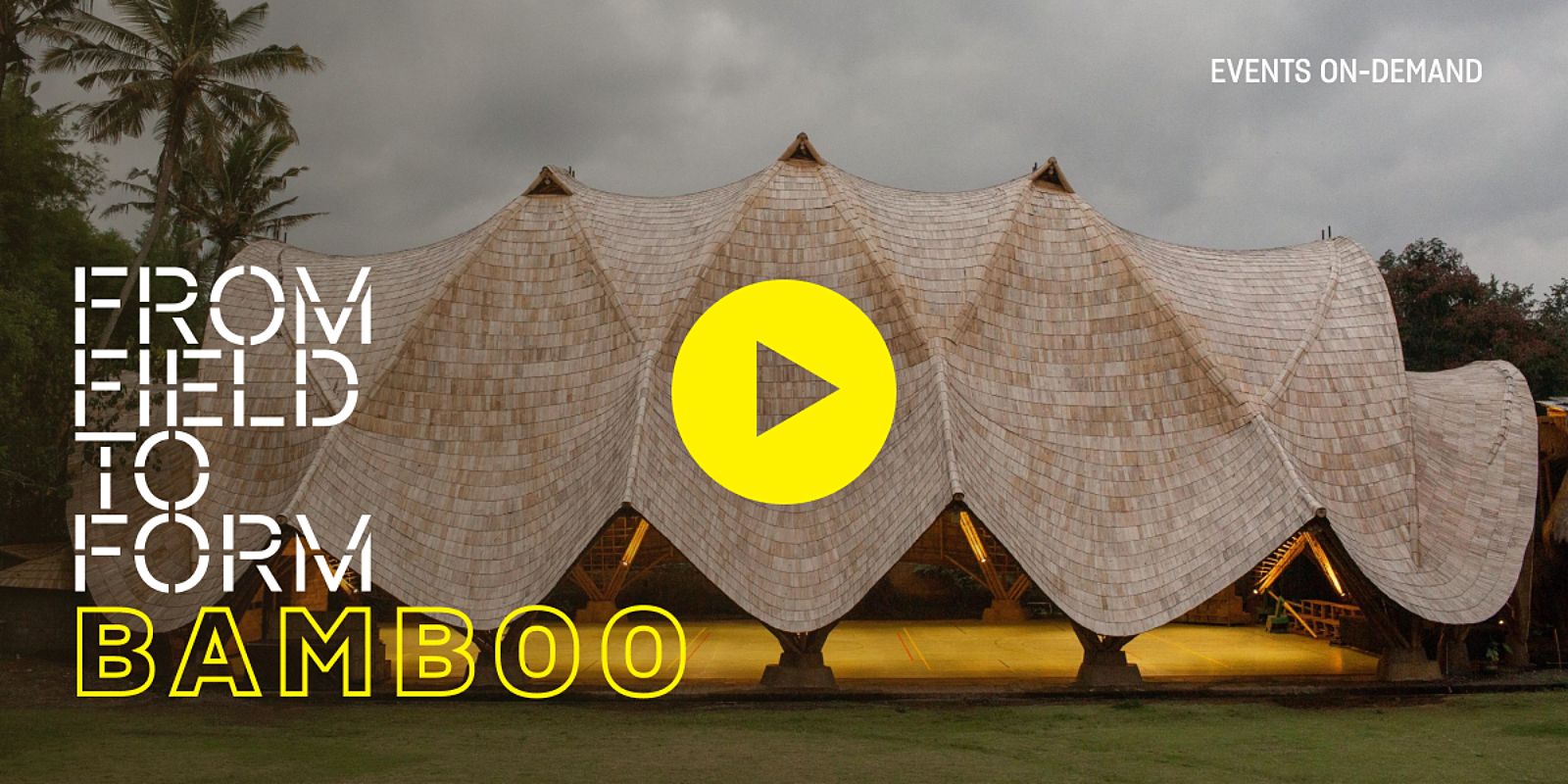
Moderated by Jonsara Ruth (HML) and Paul Lewis (LTL Architects), the event convenes experts working across the bamboo ecosystem, from regenerative cultivation and supply chains to engineered structural products and site-led design practice. Together, they consider what it will take to realize bamboo’s potential as a healthy, scalable, and climate-positive building material.
Lucas Oshun opened the conversation with a grounded view of bamboo as a regenerative agricultural crop capable of restoring ecological function and supporting rural economies. Drawing on decades of work in coastal Ecuador, he outlined bamboo’s environmental benefits, from soil stabilization to rapid biomass yield.
“Bamboo ultimately is a deforestation-free, fast-growing natural material that can be continuously harvested from the same groves without dismantling the ecosystem where [it] comes from.” -Lucas Oshun
Oshun emphasized that the key to unlocking bamboo’s full potential lies in sustained investment in research, development, and responsible plantation management, including building supply chains that create jobs, support regenerative agriculture, and restore degraded tropical landscapes where bamboo thrives.
Material innovator Jonas Hauptman explored bamboo’s morphological complexity, “both incredibly regular and incredibly irregular”, and the opportunities it presents for engineered systems. Through the development of MassBu (Mass Bamboo), Hauptman and his collaborators transform whole bamboo culms into structural panels and beams using lightly modified bamboo, maintaining the material’s natural fiber alignment and strengths.
He demonstrated experimental composite panels, taper-laminated beams, and bamboo-fortified masonry systems designed for scalable, low-carbon housing.
“The countries facing the greatest housing shortages are the same regions where bamboo naturally grows. Bamboo can offer a local, fast-growing material for building needed housing.” -Jonas Hauptman
Hauptman emphasized the importance of small, distributed “micro-factories” rather than high-capital mega-plants, positioning bamboo as a high-performance material system capable of storing significant amounts of carbon while addressing global housing needs.
Elora Hardy, director of IBUKU, offered a perspective shaped by decades of craft-led, nature-forward architectural design practice. She spoke to bamboo as a design collaborator, one that demands responsiveness to site, climate, and craft traditions.
“Designing with bamboo cannot happen on a flat paper or on a flat screen. It’s a conversation with the material and with the craftspeople.” -Elora Hardy
Sharing projects from Bali to Panama and Malaysia, Hardy demonstrated bamboo’s flexibility, texture, and personality. “There is nothing wrong with a right angle; it just has to prove its relevance like any other shape.”
Through physical model-making, hands-on experimentation, and emergent digital tools, IBUKU continues to push bamboo to its structural and expressive limits, revealing how deeply sustainable forms of architecture can emerge from close dialogue with material and place.
From Oshun’s ecological framing to Hauptman’s systems-based material research and Hardy’s craft-driven design ethos, the event mapped the full arc of bamboo’s potential. This event expands the discourse on biogenic materials by demonstrating how bamboo can support healthier, regenerative approaches to design and construction, if we commit to building the knowledge, infrastructure, and imagination required to use it well.
Related Links:
Find the speaker bios here.